
What Is a Tyre Killer?
A tyre killer is a vehicle access control barrier designed to prevent unauthorized vehicles from entering restricted areas. It uses strong, raised spikes that can puncture vehicle tyres when a vehicle attempts to pass through a restricted entry point. Tyre killers are commonly used at high-security facilities, commercial buildings, parking entrances and industrial sites. When combined with other security systems, they help regulate vehicle movement and strengthen perimeter protection.
Bollards & Tyre Killer Products
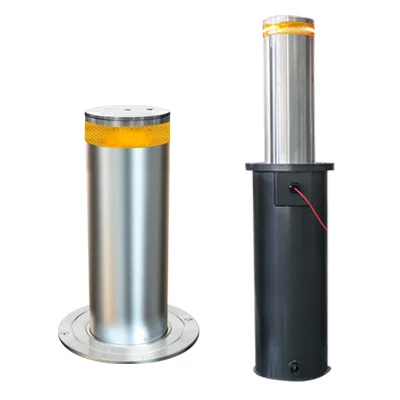
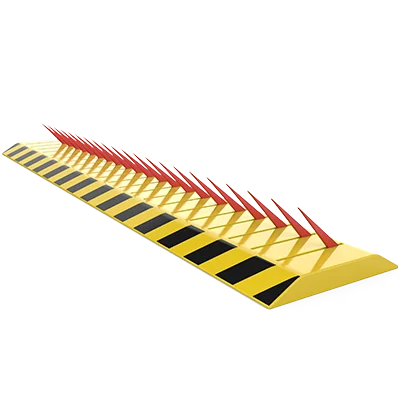
What Is a Tyre Killer and What Is a Hydraulic Bollard?
A tyre killer and a hydraulic bollard are physical security solutions designed to control vehicle movement and protect restricted areas. They are commonly used at commercial buildings, industrial facilities, government premises, parking areas, warehouses, and other locations where vehicle access needs to be managed.
Although both systems help improve perimeter security, they work differently. A tyre killer uses sharp metal spikes to stop unauthorized vehicles from passing in a restricted direction, while a hydraulic bollard rises from the ground to block vehicle access and retracts when entry is permitted.
What Is a Tyre Killer?
A tyre killer is a vehicle access control device fitted with strong metal spikes designed to puncture vehicle tyres when a vehicle crosses the device from a prohibited direction. It helps prevent unauthorized entry or exit at secured gates, checkpoints, parking facilities, and restricted roads.
Depending on the model, a tyre killer can be integrated with access control systems, security barriers, card readers, or other entry management equipment. Certain designs allow authorized vehicles to pass in the permitted direction while restricting movement in the opposite direction.
How Does a Tyre Killer Work?
A tyre killer is installed across a vehicle lane. Its spikes are arranged to restrict movement from a designated direction. When an unauthorized vehicle attempts to cross against the permitted direction, the spikes can puncture its tyres and help prevent further movement. The exact operation depends on whether the system is mechanical, automatic, or integrated with other security equipment.
Key Benefits of a Tyre Killer
- Helps prevent unauthorized vehicle entry and exit.
- Provides an additional layer of protection at restricted vehicle lanes.
- Can be integrated with suitable access control and security systems.
- Suitable for selected high-security entrances and checkpoints.
- Helps security personnel control vehicle movement through designated access points.
Where Are Tyre Killers Used?
- Industrial plants and manufacturing facilities.
- Government and high-security premises.
- Commercial buildings and restricted parking areas.
- Warehouses, logistics centres, and vehicle checkpoints.
- Selected entry and exit lanes requiring directional vehicle control.
What Is a Hydraulic Bollard?
A hydraulic bollard is a retractable vehicle access control post that moves up and down using a hydraulic mechanism. When raised, it creates a physical obstruction that helps prevent unauthorized vehicles from entering a protected area. When access is authorized, the bollard lowers into the ground to allow vehicles to pass.
Hydraulic bollards are commonly installed at building entrances, pedestrian zones, commercial complexes, government facilities, hotels, parking entrances, and other locations that require controlled vehicle access. Depending on the model and installation, they can be operated through access control systems, remote controls, push buttons, or security control panels.
How Does a Hydraulic Bollard Work?
A hydraulic bollard uses a hydraulic power unit to raise or lower its post. In the raised position, the post acts as a physical barrier across the vehicle path. When an authorized access command is received, the mechanism retracts the post into its ground housing, allowing the vehicle to pass. The operating speed, duty cycle, dimensions, and impact resistance vary by model.
Key Benefits of Hydraulic Bollards
- Provides controlled vehicle access to restricted areas.
- Retracts below ground when vehicle passage is permitted.
- Helps maintain a clear entrance when the bollards are lowered.
- Can be integrated with compatible access control systems.
- Available in different sizes and security ratings for different site requirements.
- Suitable for commercial, industrial, institutional, and selected high-security installations.
Where Are Hydraulic Bollards Used?
- Corporate offices and commercial building entrances.
- Hotels, malls, and business parks.
- Government buildings and controlled-access premises.
- Pedestrian streets and vehicle-restricted zones.
- Industrial facilities, parking areas, and perimeter access points.
Difference Between a Tyre Killer and a Hydraulic Bollard
Both systems help secure vehicle access points, but the right choice depends on the security objective, site layout, traffic flow, and required level of vehicle protection.
Tyre Killer
A tyre killer is primarily used to restrict vehicle movement in a prohibited direction by damaging tyres that cross its spikes. It is generally considered for designated vehicle lanes where directional enforcement is required.
Hydraulic Bollard
A hydraulic bollard physically blocks a vehicle lane when raised and allows passage when lowered. It is useful where a site needs to switch between restricted and permitted vehicle access while keeping the entrance clear when the bollard is retracted.
For many sites, the decision should be based on a professional assessment of vehicle volume, emergency access requirements, installation conditions, safety measures, and the manufacturer's specifications.
How to Choose the Right Vehicle Access Control System
Before selecting a tyre killer or hydraulic bollard, consider the following factors to identify a suitable solution for your premises.
- Security requirements: Define whether you need directional vehicle restriction or a retractable physical access barrier.
- Traffic volume: Consider the number and type of vehicles using the entrance each day.
- Installation conditions: Check available space, foundation requirements, drainage, and site conditions.
- Access control integration: Confirm compatibility with the required controls and security equipment.
- Safety and emergency access: Plan for pedestrians, authorized vehicles, emergency services, and suitable safety controls.
- Maintenance and reliability: Review operating frequency, service requirements, warranty, and availability of support.
Looking for Tyre Killers or Hydraulic Bollards?
CDN TECHNOLOGIES (INDIA) PVT. LTD. provides guidance on vehicle access control and perimeter security solutions for commercial, industrial, and institutional applications. Contact our team to discuss your site requirements and identify a suitable product.
Enquire on WhatsApp